


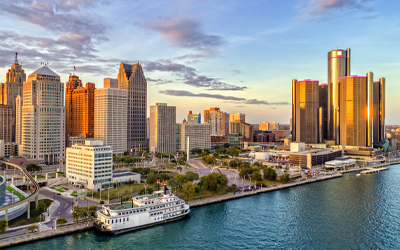


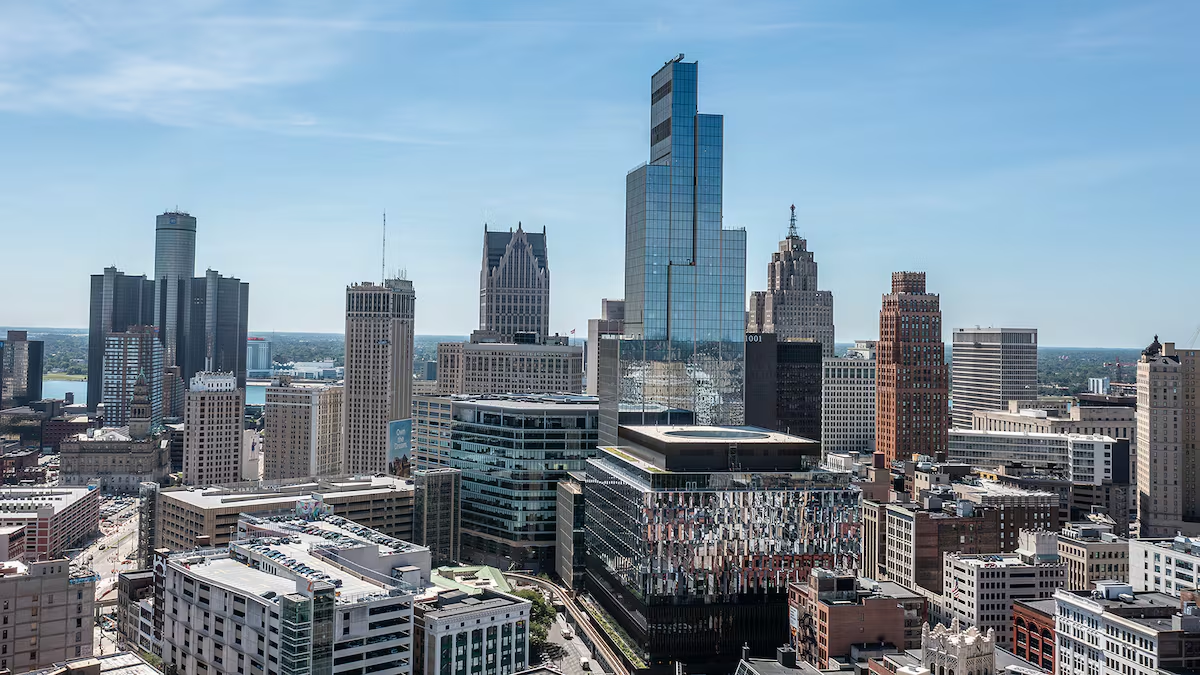
For decades, Detroit watched people leave.
The city’s population peaked at more than 1.8 million in 1950 before declining every decade through 2020, when it fell to about 639,000.
Now, with three straight years of population growth providing momentum, a new coalition is working to retain residents, invite former ones to return and welcome newcomers.
MoveDetroit, a privately funded nonprofit that launched in April, says it is making early progress, assembling more than 50 members and partners and rolling out initiatives ranging from financial incentives for current and prospective residents to a neighborhood ambassador program.
Recent estimates show Detroit has added about 15,000 people over the past three years, bringing its population to roughly 649,000. Michigan has seen positive net migration and ranks fifth nationally on a measure of accelerating young-adult population growth, MoveDetroit President and CEO Hilary Doe said
“Even though things are looking good for Detroit, more than ever it’s important to keep our foot on the accelerator,” she said, pointing to national headwinds like a tougher job market for recent college graduates and a sharp slowdown in international migration.
MoveDetroit’s initial efforts include Make Detroit Home, a $500,000 retention and attraction program to assist 313 households. It drew roughly 6,500 applications — more than 20 times the number of households the program was designed to serve.
More than 100 households representing nearly 300 residents are fully enrolled — with an estimated $7.8 million in direct and indirect annual economic impact — while about 200 other households have been accepted and are completing the final steps.
The “enormously successful” program includes funding for relocation expenses, down payment assistance and business projects, along with community programming and workforce connections, Doe said. The overwhelming response prompted the group almost immediately to begin planning a second round that could be less constrained by a fixed number of participants, with an update expected this fall.
MoveDetroit also has selected 16 neighborhood ambassadors from more than 300 nominations. The entrepreneurs, artists, small business owners and community advocates will provide feedback to help shape the coalition’s programming, priorities and storytelling efforts.
MoveDetroit also plans to launch a broader marketing campaign and expanded website at the end of September, featuring stories about Detroiters, neighborhood information, resources and programs, and opportunities for residents and others with ties to the city to get involved.
The group, which will soon kick off a national marketing campaign and a revamped website, wants to make it easier for anyone to “raise their hand.”

“Growth is a group project,” Doe said. “The way that we do this work is by everybody locking arms. It’s inherently difficult work that requires everyone.”
MoveDetroit will have a prominent presence at this week’s Detroit Homecoming, the annual gathering produced by Crain’s Detroit Business of metro Detroit natives, or “expats,” who found fortune elsewhere. It’s intended to reintroduce them to their hometown — or perhaps give them reasons to “boomerang” back.
Doe will participate in a panel discussion with Dan Gilbert, the billionaire founder of Rocket Companies Inc., major downtown developer and MoveDetroit chair, and his son Grant. The coalition also will host a tour of east side neighborhoods highlighting housing, restaurants, gathering spaces and other amenities intended to show Homecoming attendees what it is like to live, work and play in the city.
Doe, who served as Michigan’s first growth officer in 2023-25, identifies three broad areas where Detroit needs to improve to sustain population growth: median income, amenity- and transit-rich neighborhoods, and educational attainment.
At the same time, Doe points to several factors working in Detroit’s favor, including a fast-growing startup ecosystem, available jobs, relatively attainable housing, and the culture, sports and music.
MoveDetroit is studying the successes and pitfalls of growing cities such as Austin, Texas; Columbus, Ohio; Seattle; Nashville, Tenn.; and Atlanta but does not want Detroit simply to replicate them.
“Detroit’s unique, and we want Detroit to be Detroit on the other side of our growth,” Doe said. The goal, she added, is to “take the parts we can learn from and develop a strategy that’s unique to Detroit.”
Story by: David Eggert | Crain’s Detroit Business