


Set to open in January 2028, the William Davidson Gallery will bring contemporary art, botanical research and nature together, with Israeli ceramic artist Zemer Peled chosen for its inaugural exhibition
Construction has begun on a new art gallery at the Jerusalem Botanical Gardens, a 12 million shekel ($3.8 million) project that will combine contemporary art, botanical research and environmental education, with an accompanying sculpture trail set to open in January 2028.
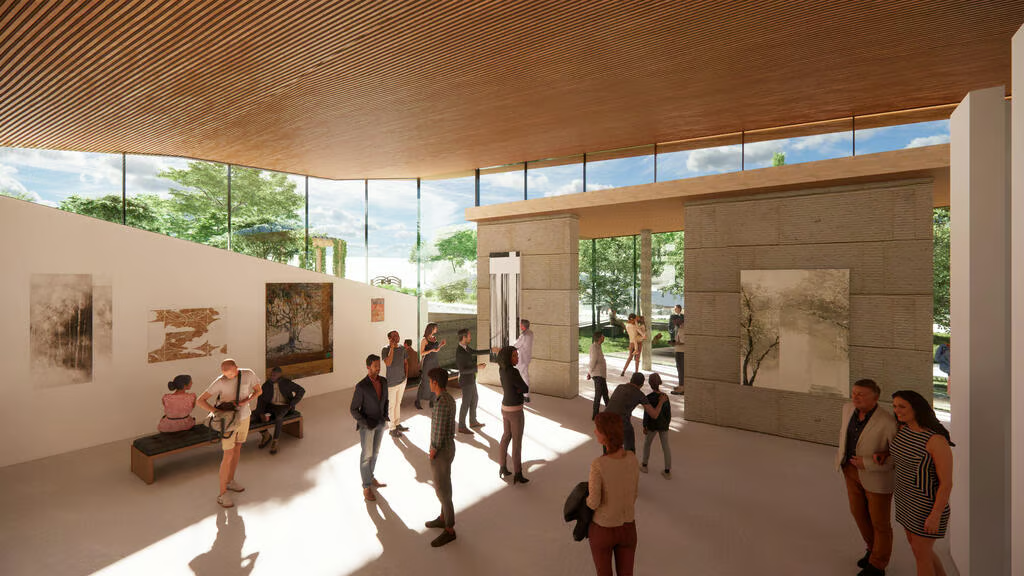
The William Davidson Gallery will cover 250 square meters (about 2,700 square feet) and feature rotating exhibitions by Israeli and international artists, artist residency programs, collaborations between artists and scientists, and educational and cultural activities.
Organizers say it will be Israel’s only gallery dedicated specifically to artistic interpretations of botany and the natural world, offering visitors a new way to explore biodiversity, sustainability and humanity’s relationship with nature.
The project is supported by the William Davidson Foundation, the Jerusalem Municipality and the Wolfson Foundation, in partnership with the Jerusalem Foundation, which supports cultural initiatives and urban development across the city.
Located within the Gardens’ living botanical collections, which include native Israeli flora and rare plant species, the gallery will integrate art into the natural landscape rather than function as a conventional exhibition space.
A gallery designed to disappear into the landscape
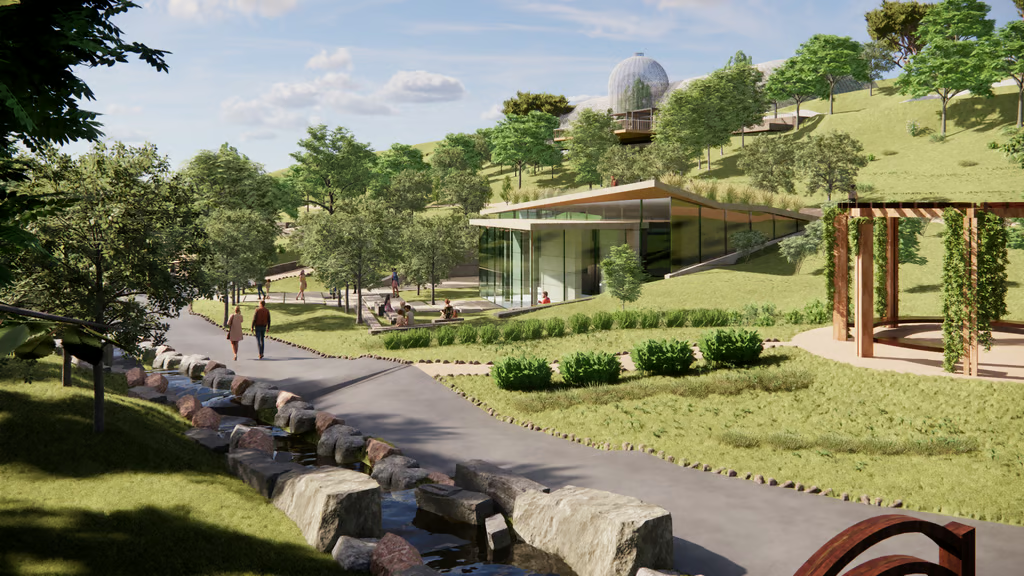
Architect Matti Rosenshine of Rosenshine Architects designed the building to preserve the Gardens’ existing landscape while minimizing its visual impact.
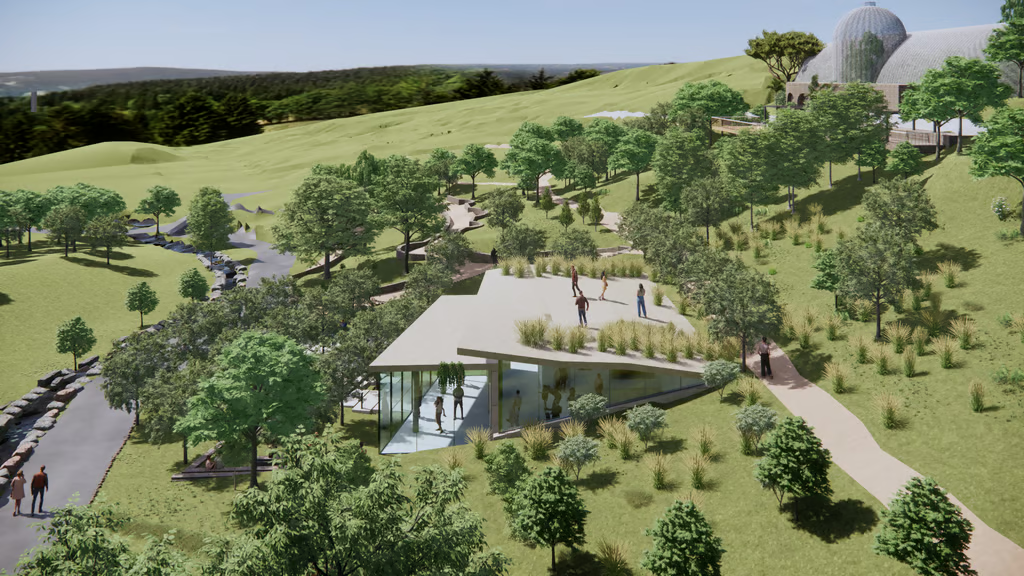
The structure will be integrated into the site’s naturally sloping terrain, with much of the building positioned below ground and only its front facade visible.
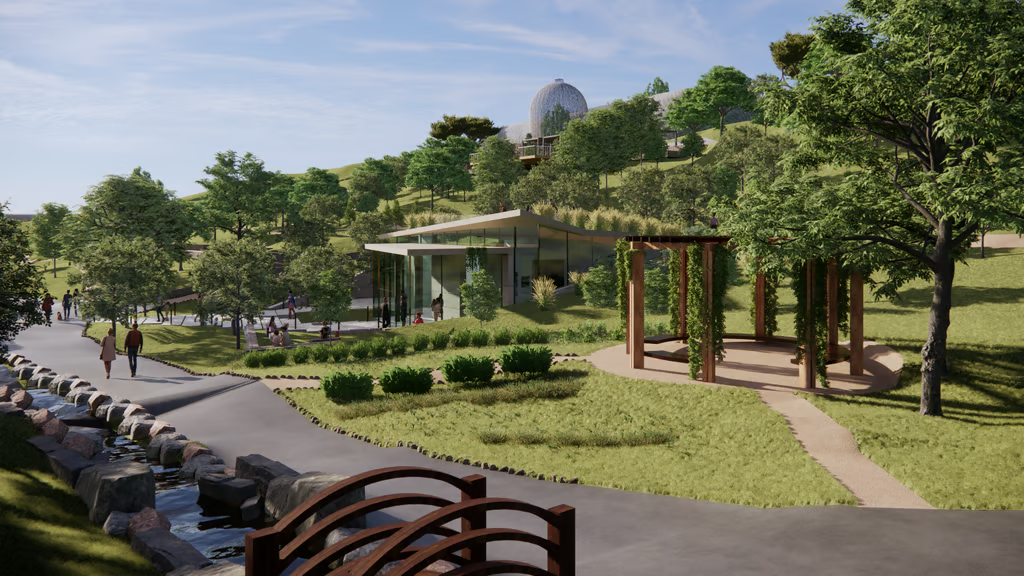
A terrace overlooking the Gardens will sit above the gallery, while a green roof planted with wild grasses and native vegetation will help the structure blend into its surroundings.
Large glass panels between the building’s horizontal surfaces will create a continuous band of light, visually connecting the interior exhibition space with the surrounding vegetation.
“The idea was to create the impression of a layer of earth gently lifting upward to form a space beneath it, with a terrace above overlooking the Gardens,” Rosenshine said.
“The green roof and native vegetation will reinforce the building’s integration into the landscape, while the continuous band of glass will blur the distinction between inside and outside.”
Israeli ceramic artist to headline opening exhibition
The gallery’s inaugural exhibition will feature internationally acclaimed ceramic artist Zemer Peled in what organizers describe as her first exhibition in Israel.
Co-curated by Yaniv Shapira and Hannah Rendell, the exhibition will feature works created in response to the Gardens’ botanical collections.
Approximately 20 pieces will be displayed inside the gallery, while three monumental outdoor sculptures, each standing about 2 meters (6.6 feet) tall, will be installed along the new Sculpture Trail.
Peled is known for assembling thousands of porcelain fragments into intricate organic forms that resemble natural processes of growth, flowering and transformation.
By extending the exhibition beyond the gallery walls and into the surrounding gardens, organizers hope visitors will encounter the sculptures alongside living plants and explore connections between art, botany and the environment.
Following its Jerusalem debut, the exhibition is scheduled to travel to other botanical gardens around the world.
“Our plant collections hold extraordinary stories, and art can help people connect with them in new ways,” said Hannah Rendell, executive director of the Jerusalem Botanical Gardens.
“We want the Gallery to grow directly out of the Gardens’ purpose: inspiring curiosity about plants and deepening our understanding of the natural world.”
Rendell said Israel’s flora and botanical research could provide inspiration for artistic projects and educational experiences accessible to visitors of different ages, religions and socioeconomic backgrounds.
Expanding Jerusalem’s cultural landscape
Darin McKeever, president and CEO of the William Davidson Foundation, said the project would strengthen Jerusalem’s position as a cultural destination while encouraging greater public engagement with environmental issues.
“Jerusalem is a city where history, culture, and innovation intersect,” McKeever said. “The William Davidson Gallery will add an important new cultural destination to the city, creating opportunities for people of all backgrounds to engage with art while developing a deeper appreciation for the environment and the remarkable biodiversity represented within the Jerusalem Botanical Gardens.”
McKeever said the foundation was proud to support a project intended to enrich Jerusalem’s cultural life and create opportunities for education and public engagement for generations to come.
The gallery will also expand the Gardens’ international collaborations, building on previous initiatives connecting art, science and botanical conservation.
One such project was “Seeing the Invisible,” an augmented reality art exhibition developed at the Jerusalem Botanical Gardens in 2021 and subsequently presented at 20 botanical gardens across six countries.
Organizers envision the new gallery as a venue for bringing exhibitions from leading botanical gardens around the world to Jerusalem while enabling Israeli exhibitions to travel internationally.
The initiative is also expected to foster collaboration among artists, curators, botanists and scientists.
“Botanical gardens around the world already share scientific knowledge and work together to conserve rare plants,” said Dr. Ori Fragman-Sapir, scientific director of the Jerusalem Botanical Gardens.
“Bringing scientific research together with traveling art exhibitions opens an exciting new avenue for collaboration.”
He said such partnerships could help introduce international audiences to Israel’s rare plant species while encouraging exchanges about biodiversity and environmental change.
Bringing sculpture into the gardens
The accompanying Sculpture Trail will incorporate artworks into walking routes through the Gardens, allowing visitors to experience them alongside living botanical collections.
Eli Becker, head of landscape planning, horticulture and garden development at the Jerusalem Botanical Gardens, said the project would encourage visitors to examine their natural surroundings more closely.
“Art encourages people to pause, look closely and notice details they might otherwise pass by,” Becker said. “Integrating sculpture into a walking route through nature offers another way to reveal the richness of the botanical collections we grow and cultivate, inviting visitors to discover the Gardens from a new perspective.”
The gallery and sculpture trail are part of a broader development program at the Jerusalem Botanical Gardens, which has expanded its visitor facilities and cultural offerings in recent years.
Other projects include a new visitor center, the Japanese House and the Marcus Margulies Pavilion, a new entrance building planned to incorporate climate-controlled exhibition greenhouses and a cafe.
“The Jerusalem Botanical Gardens has undergone significant development in recent years, increasingly becoming an impressive gateway to the capital and a leading botanical and cultural destination in Israel,” said Tom Amit, the Gardens’ chief executive officer. “The William Davidson Gallery and Sculpture Trail will expand the visitor experience and create new connections between nature, art and culture.”
Amit said the goal was to provide visitors with experiences combining recreation, education, curiosity and artistic inspiration.
One of the Middle East’s largest botanical collections
The Jerusalem Botanical Gardens covers approximately 150 dunams (37 acres) in the heart of Jerusalem and houses more than 7,400 plant species and varieties from around the world.
Its living botanical collection, described by the Gardens as the largest in the Middle East, is organized into six geographical sections representing the plant landscapes of Europe, North America, Australia, Southern Africa, Southwest and Central Asia, and the Mediterranean.
The Gardens attract approximately 400,000 visitors annually.
With the addition of the William Davidson Gallery and Sculpture Trail, organizers hope to broaden the institution’s role beyond botanical conservation and education, positioning it as an international meeting point for contemporary art, scientific research and environmental awareness.
Story by: ynet Global