

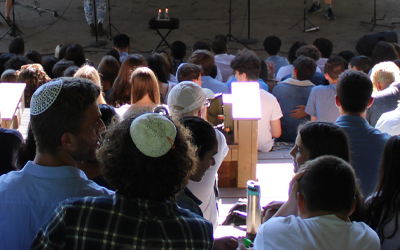
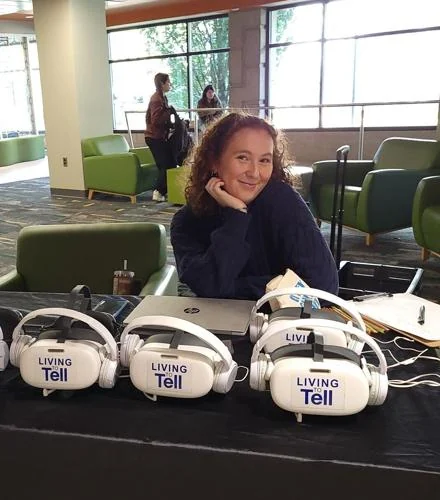
Wayne State’s Students for Israel brought the Survived to Tell virtual reality experience to campus, giving students an opportunity to hear firsthand accounts from survivors of the Oct. 7 attacks and engage in conversations about Israel.
Last year, in attending the Israel-American Council (IAC) Summit with Hillel of Metro Detroit (HMD), I learned about an organization called Israel-IS whose mission is to transform how the world sees Israel through empowering young Israelis to share their stories on the global stage.
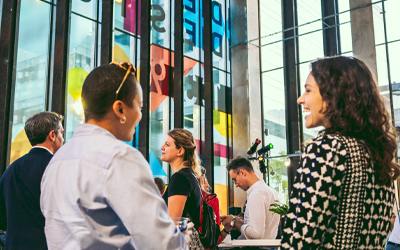
After meeting them, I knew I wanted to bring their innovative approach to storytelling to Wayne State through Students for Israel (SFI). On Oct. 19, we were able to host their Survived to Tell program, both at the HMD lounge and at a table on the first floor of the Wayne State Student Center, thanks in part to funding from StandWithUs and Hasbara.
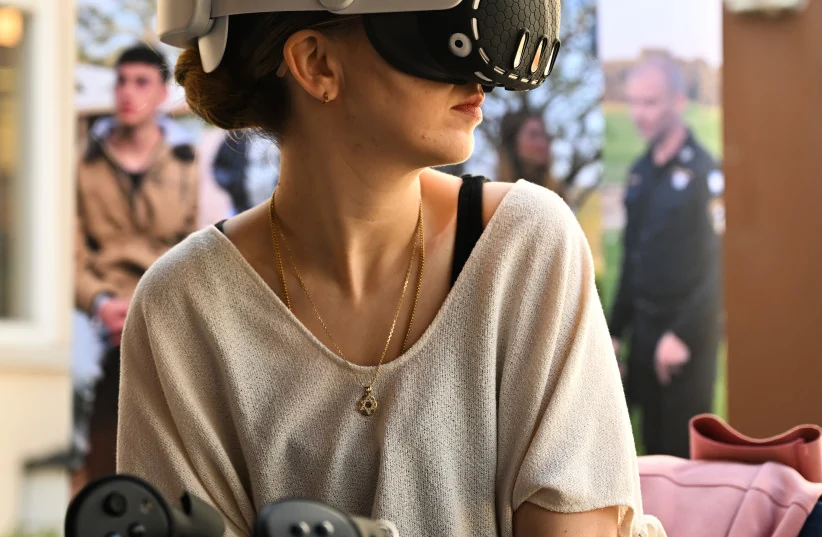
The Survived to Tell program welcomes students to put on a virtual reality (VR) headset and headphones, so they can see and hear testimonies from survivors of Oct. 7, including two Nova Festival attendees, a police officer and a former hostage. Through the testimonies, viewers are taken to different sites of the attacks while audio plays from that day and text message exchanges are shown.
According to Israel-IS, the events of Oct. 7 have only heightened the urgency of its mission, reinforcing its dedication to “fostering meaningful global conversations and combating antisemitism and misinformation with personal, nuanced perspectives.”
For our program at Wayne State, we were joined by Israel-IS staff members Neriya and Joe, who helped spearhead the direction and execution of the experience. They believe in the importance of sharing authentic, personal stories and connecting with people before connecting them with ideas. The moment the VR headsets were set on the table people were interested, because who does not love having a virtual reality experience?
We told curious students about how we had friends who went to a music festival, experienced a horrific event and almost did not come home. We asked the students if they would be interested in hearing the story and when they said yes, we set them up with the VR headsets and headphones. The experience was only five minutes long. We helped students process the information they had just seen, as we know it is not easy to digest.
Lots of students told us that the experience was “heavy but impactful,” but what stood out to us was that many of the people who did the VR experience did not know what the Oct. 7 massacre was. We used this as a learning opportunity, because while most of the individuals knew of the Israel-Hamas war, they did not know what ultimately led to it. Once we helped them connect the dots, they started to have a better understanding of what was really going on with Israel and Gaza. Thanks to Israel-IS, we were able to connect, engage and reach many students who otherwise may never have understood or known about Oct. 7.
However, we still received backlash for our program. Wayne State’s Students Justice for Palestine (SJP) accused SFI of harassing students and forcing them “to watch and listen to Israeli propaganda” via an Instagram post. It is student groups and social media postings like this that continue to demonstrate the importance of fighting back against the anti-Zionist/antisemitic hate and misinformation movements that have been flooding college campuses. Survived to Tell helped us do exactly that.
Hosting programs like this, and partners like Israel-IS, shows that we will not be afraid to share the truth, no matter how many loud voices and how much fear mongering is against us. We are here to stay. We are not going anywhere. They cannot get rid of us, no matter how hard they try. @
Leah Langnas is a Master of Public Administration student at Wayne State University, vice president of the Students for Israel (SFI) student group and an Inside the Middle East (ITME) Fellow.
Story by: Leah Langnas | Jewish@edu